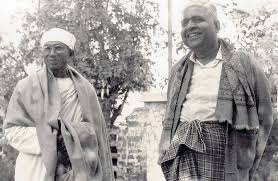
Anagarika Munindra
Published by ds on
Anagarika Munindra
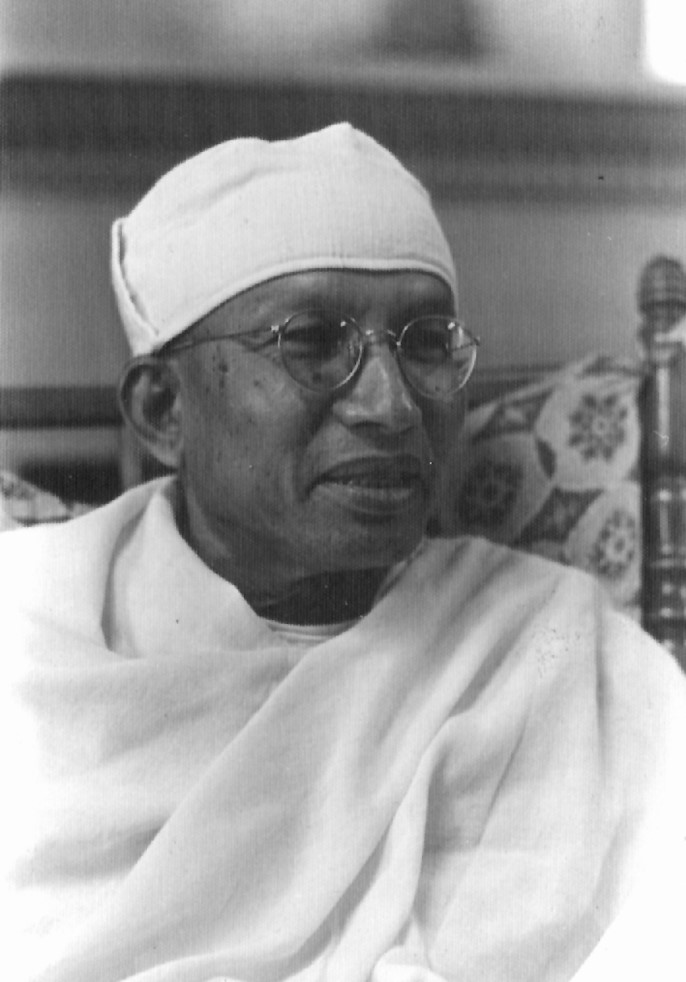
Anagarika Munindra (1915–2003) was a Bengali Buddhist master and scholar who became one of the most important Vipassana meditation teachers of the twentieth century. Unassuming, genuine, and always encouraging, Munindra embodied the Buddhist teachings, exemplifying mindfulness in everything he did.
Anagarika simply means a practicing Buddhist who leads a homeless life without attachment in order to focus on the Dhamma. Munindra was born in Chittagong, Bangladesh, to the Barua family, descendants of the original Buddhists of India forced east by the eleventh-century Muslim invasion.
Quotes
“I practice meditation to notice the small purple flowers growing by the roadside, which I otherwise might miss.”
“Everything is meditation in this practice, even while eating, drinking, dressing, seeing, hearing, smelling, tasting, touching, thinking. Whatever you are doing, everything should be done mindfully, dynamically, with totality, completeness, thoroughness. Then it becomes meditation, meaningful, purposeful. It is not thinking, but experiencing from moment to moment, living from moment to moment, without clinging, without condemning, without judging, without evaluating, without comparing, without selecting, without criticizing—choiceless awareness.”
“Meditation is not only sitting; it is a way of living. It should be integrated with our whole life. It is actually an education in how to see, how to hear, how to smell, how to eat, how to drink, how to walk with full awareness. To develop mindfulness is the most important factor in the process of awakening.”
“Death I don’t mind. Every moment we are dying. Everything is impermanent. Who is dying? There is nobody dying. It is just a process. This is merely a law of nature… everything in nature is arising & vanishing. There is nothing to be afraid of. In death also, smiling you can go. Every moment we are dying. Once you are acquainted with this, then it is simple.”
“Mind by nature has no color. When it is colored with greed, we call it “greedy mind.” When anger arises, at that moment, it is called “angry mind.” If there is no mindfulness, mind is influenced by this anger. Anger has the nature to pollute the mind; it creates poison. But mind is not anger; anger is not mind. Mind is not greed; greed is not mind. Please remember this. Mind has no nature of liking or disliking. “Mind” means “knowing faculty,” “cognizing faculty.” …Mindfulness is a different thing: alertness, awareness, remembering, heedfulness. It means not to forget, just to be aware, to be mindful of what is going on. When you are asked to walk on a one-bamboo bridge over the river, you have to be so careful on every step. Once you forget, there is every possibility of falling down. If you lose your mindfulness, you will hurt yourself or kill yourself. So, in reality, mindfulness means not to forget what is going on at the present moment – in thought, in word, in deed.”
Life History
1915 – Born in a small village near Chittagong in what is now Bangladesh, but was in 1915 still a part of India. His family were members of the
Barua caste, who consider themselves to be the descendents of Gotama Buddha that had been pushed east by the pressures of history.
1936 – Shortly after his graduation from high school he made the decision to move to Calcutta where his studies could progress in a cosmopolitan environment – passing on becoming a Theravāda Buddhist monk, as he felt that his studies would progress more rapidly if he remained a layman. Lived and taught English to the Bengal Buddhist monks. During this time he studied Pali and Abhidhamma with senior Bengali monks of the Society. Chose to remain a layman as he believed the life was too encumbered by ritual.
1938 – Munindra was invited by the Mahābodhi Society to move to Sārnāth and help with the Society’s projects there. He accepted this invitation and spent the next ten years at this pilgrimage centre where the Buddha had delivered his first teaching. During this time, Munindra was responsible for the bookshop in the new Mahābodhi Society Temple at the site, and he also would spend time with the many visitors who came to see the temple and its magnificent frescos of the Buddha’s life. Among those whom he met in this manner were some important religious and political figures of the period, including Gandhi, who sat on the floor of the temple with Munindra to listen while he explained the paintings of the Buddha’s life.
During his time in Sārnāth, Munindra became fluent in Hindi as well as continuing his studies of both Buddhism and Theosophy with teachers at the site and in nearby Benares. At this time, a diverse group of spiritual teachers were attracted to the area, and Munindra met and became acquainted with Lama Govinda, Krishnamurti, and Ānanda Mayī Mā among others.
1953 – Munindra was chosen to be the Superintendent of the Mahābodhi Temple, a unique honour because this was the first time that the most important temple in the Buddhist world had been under the management of a Buddhist since the twelfth century.
Munindra’s responsibilities included not only the day to day administration of the temple and its staff, but also the delicate task of transforming the ritual practices at the temple from Hindu to Buddhist. He was also involved in government plans to develop Bodh Gayā as a place of Buddhist pilgrimage.
1956 – Prime Minister U Nu invited Munindra to visit Burma for the
purpose of receiving instruction in vipassanā meditation from Mahāsi Sayādaw at Thathana Yeikta, his meditation centre in Rangoon. Munindra had wanted to receive such instruction for many years, but it was not available to him in India because the practice of vipassanā meditation had died out there centuries earlier.
1957 – Munindra spent nine years training and teaching vipassanā meditation in Burma from 1957 to 1966.
At the request of U Nu, S.N. Goenka, a wealthy industrialist born into a wealthy Indian Hindu family residing in Rangoon, became the sponsor of Munindra’s visit to Burma. Trained in vipassanā by U Ba Khin, Goenka readily agreed to support Munindra’s physical needs in Burma, and through this initial association they became life-long friends and colleagues as teachers of vipassanā in India and the West.
1966 – Munindra determined to return to India in 1966 and teach
vipassanā meditation in Bodh Gayā.
He had mastered the meditation techniques of Mahāsi Sayādaw and worked as a teacher at his centre. He had also experienced a wide variety of other meditation methods and studied the Pali Tipiṭika very thoroughly. This training and experience combined with his command of English, Bengali, and Hindi prepared him well to instruct those whom he might meet in India.
Munindra resided and taught in Bodh Gayā until 1980.
His impact on Buddhism in the West was most profound during this period from 1966 to approximately 1980. During those years he was one of only a few highly qualified vipassanā teachers available who spoke fluent English and was accessible to practitioners from the West. Beginning in 1977, he also made teaching tours to North America and Europe at the invitation of his students.